Functional mushroom brands love to market their products as natural. The problem is that "natural mushroom supplement" can mean very different things. One product might contain a concentrated fruiting body extract, while another contains mycelium grown on grain. The mushroom species, part used, extraction method, and dosage can all affect what you're actually taking.
Then there's the evidence.
Small human trials support some potential benefits, while others still rely mainly on animal or laboratory research. Natural doesn't necessarily mean effective, high quality, or completely risk-free.
Below, we explore the main types of mushroom supplements, their possible benefits, how much to take, potential risks, and what to look for in a quality product.
What Are the Main Types of Natural Mushroom Supplements?
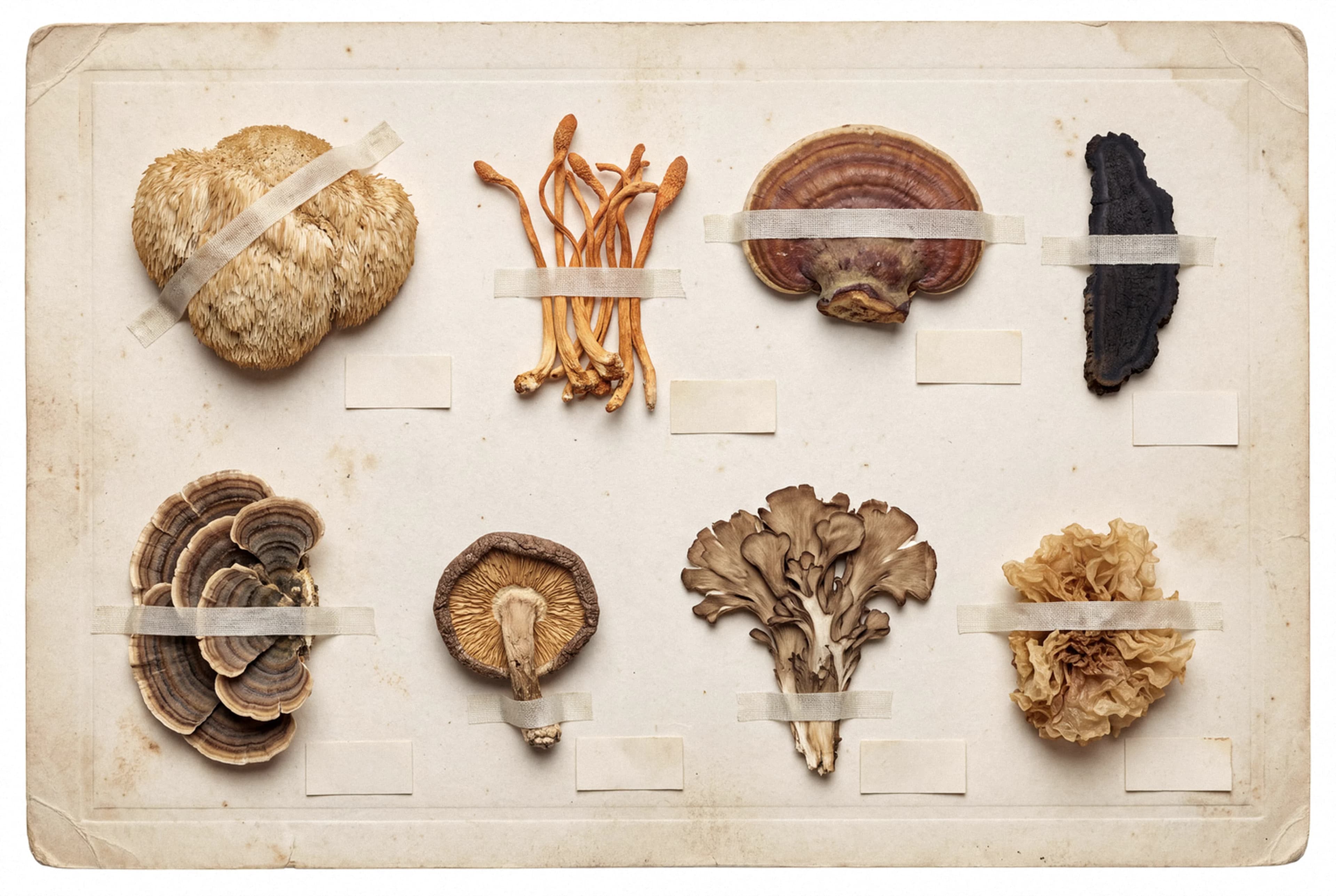
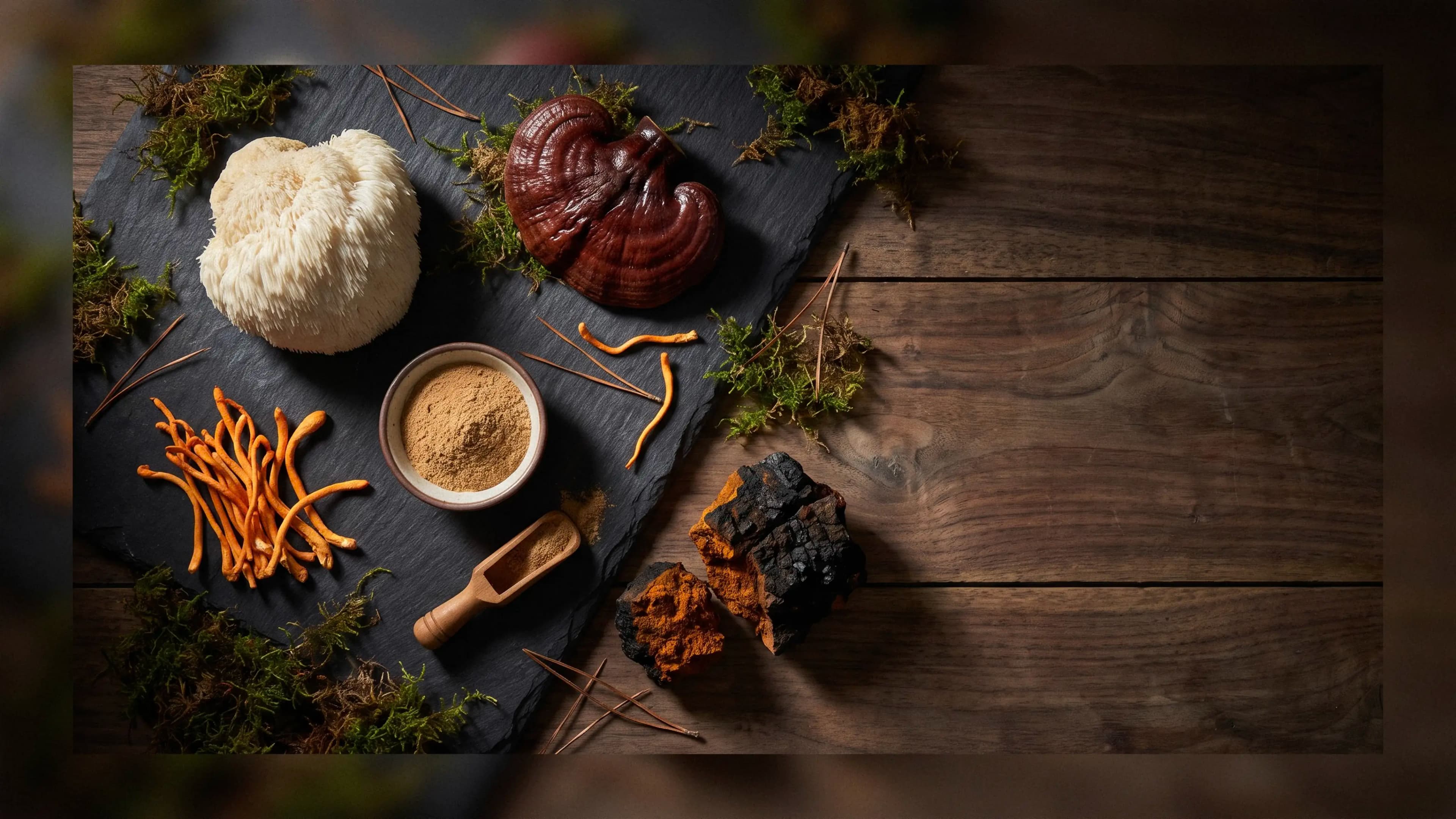
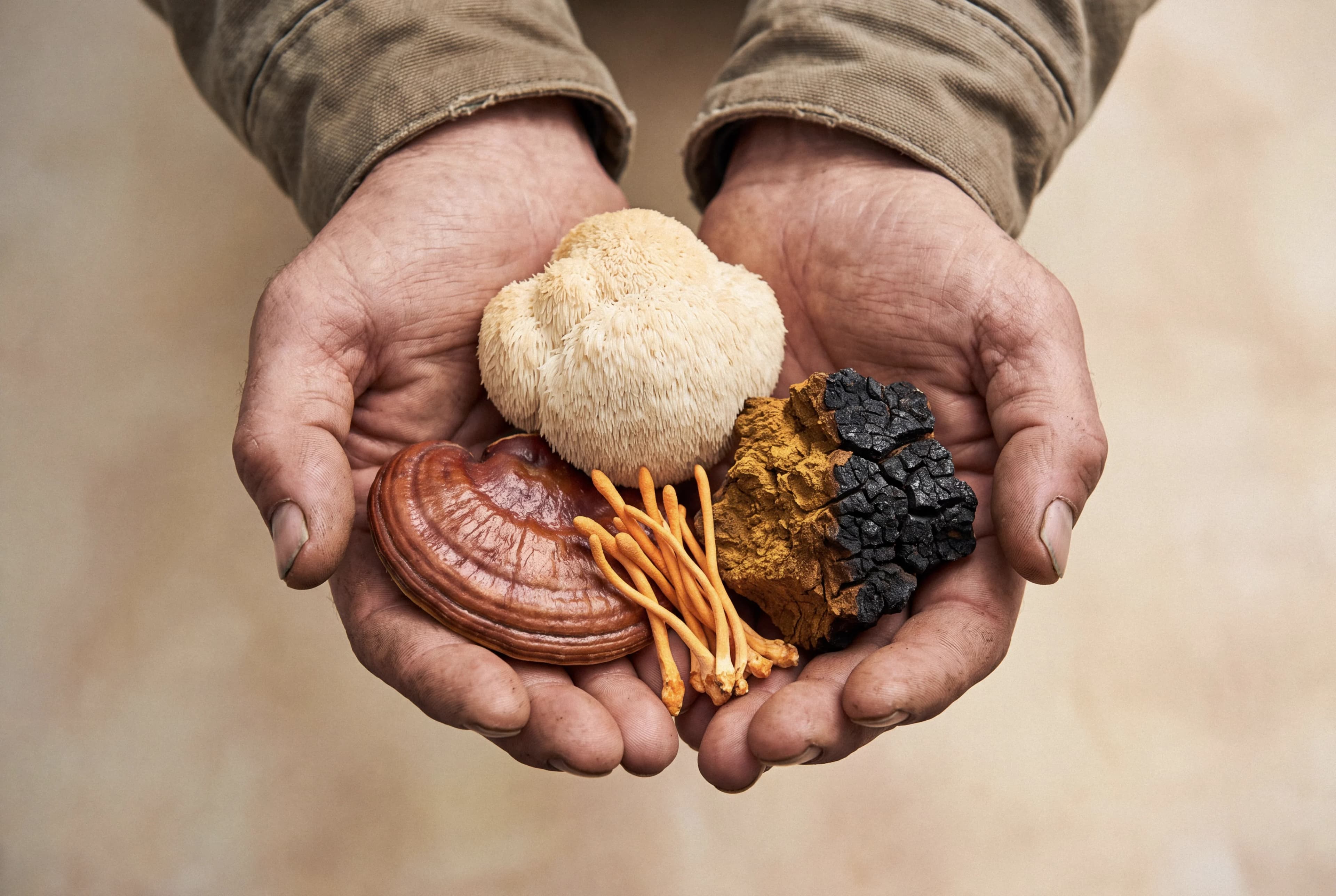
Most natural mushroom supplements focus on four species. They're not simply different versions of the same product. Each mushroom has a different chemical profile and tends to be taken for a different reason.
Lion's Mane
Lion's Mane is the obvious starting point if your main goal is focus. It's usually taken during the day to support memory, concentration, and mental clarity.
There is some human research behind those claims, although the results are mixed. A small trial in healthy adults found faster performance on one cognitive task, but several other results were inconclusive.
Reishi
Reishi sits at the other end of the day. It's commonly taken for relaxation, sleep, and recovery, usually as part of an evening routine.
Don't expect it to knock you out like a sleeping pill.
Reishi isn't a sedative, and any effect is likely to be gentler and more gradual. Human research remains limited, although one placebo-controlled trial found improvements in fatigue and general well-being.
Cordyceps
Cordyceps is the energy mushroom. People usually take it for stamina, exercise, or getting through a physically demanding day.
Again, it isn't a stimulant. There's no caffeine-like buzz or sudden rush of energy. The research is mixed, although some small human trials have reported improvements in certain measures of exercise capacity.
Chaga
Chaga is less targeted. Rather than being taken for focus, sleep, or energy, it's generally used for antioxidant and immune support.
This is also where the evidence becomes thinner. Chaga contains several potentially useful compounds, but most of the current research has involved cells or animals rather than people.
What Forms Do Mushroom Supplements Come In?
The same mushroom can look very different depending on how it's sold. The important question isn't which format sounds best. It's what the product actually contains.
- Tinctures contain mushroom compounds in a concentrated liquid. They're easy to take directly or add to coffee, tea, food, or another drink.
- Capsules provide a fixed serving without the taste. Check whether they contain an extract or simply ground mushroom powder, as the two aren't equivalent.
- Powders are easy to mix into drinks and meals. However, "powder" only describes the format and doesn't tell you whether the mushroom has been extracted.
- Gummies, coffees, and mushroom blends are convenient. The downside is that they may contain small quantities or fail to state how much of each mushroom is included.
No format is automatically better. A well-made capsule is preferable to a poor tincture. Species, extraction, concentration, and testing matter far more than whether the product comes with a dropper.
How Much Should You Take?
Here's the slightly frustrating answer: it depends.
There is no standard dosage covering every mushroom supplement. A gram of raw powder isn't equivalent to a gram of concentrated extract, and even two tinctures may have very different extraction ratios.
Follow the instructions for the product you've bought. For Lucetic mushroom extracts, the advised amount is 1-2 drops. You can take them directly or add them to food or a drink.
Are Natural Mushroom Supplements Safe?
Most people tolerate mushroom supplements without any problems. Possible side effects include digestive discomfort, headache, dizziness, rash, or an allergic reaction.
The FDA recommends speaking to a healthcare professional before taking supplements alongside medication. This is particularly important if you take medicines affecting blood clotting, blood sugar, blood pressure, or immune function.
You should also get medical advice if you are pregnant or breastfeeding, have kidney or liver disease, or are preparing for surgery. Chaga deserves additional caution because prolonged, high-dose consumption has been linked to kidney injury in case reports.
What Should You Look for in a Natural Mushroom Supplement?
Natural mushroom supplements vary enormously in quality. A good manufacturer shouldn't make you search for basic information about what's inside.
-
The species should be named clearly. Look for both the common and scientific names rather than a vague "mushroom complex."
-
Check which part of the fungus is used. Fruiting body extracts are generally preferable to grain-heavy products made from mycelium.
-
Look for the extraction method and concentration. Dual extraction captures both water and alcohol-soluble compounds, while a stated ratio helps you judge the concentration.
-
Independent testing should be easy to verify. A certificate of analysis should confirm the mushroom's identity and check for heavy metals, microbes, and other contaminants.
-
Read the rest of the ingredient list. Avoid proprietary blends, unnecessary fillers, and products that hide the quantity of each mushroom.
Lucetic mushroom extracts are made from US-grown fruiting bodies using dual extraction at a 10:1 concentration. Every batch is independently tested, with no grain-grown mycelium or unnecessary fillers. Choose Lion's Mane, Reishi, Cordyceps, or Chaga based on what you actually want from your supplement.
References
-
Docherty S, Doughty FL, Smith EF. The acute and chronic effects of Lion’s Mane mushroom supplementation on cognitive function, stress, and mood in young adults: a double-blind, parallel-groups pilot study. Nutrients. 2023;15(22):4842.
-
Tang W, Gao Y, Chen G, et al. A randomized, double-blind and placebo-controlled study of a Ganoderma lucidum polysaccharide extract in neurasthenia. Journal of Medicinal Food. 2005;8(1):53–58.
-
Chen S, Li Z, Krochmal R, et al. Effect of Cs-4 (Cordyceps sinensis) on exercise performance in healthy older subjects: a double-blind, placebo-controlled trial. Journal of Alternative and Complementary Medicine. 2010;16(5):585–590.
-
Fordjour E, Manful CF, Javed R, et al. Chaga mushroom: a super-fungus with countless facets and untapped potential. Frontiers in Pharmacology. 2023;14:1273786.
-
US Food and Drug Administration. Mixing Medications and Dietary Supplements Can Endanger Your Health.
-
Kwon O, Kim Y, Paek JH, et al. Chaga mushroom-induced oxalate nephropathy that clinically manifested as nephrotic syndrome: a case report. Medicine. 2022;101(10):e28997.
-
US Food and Drug Administration. FDA 101: Dietary Supplements.