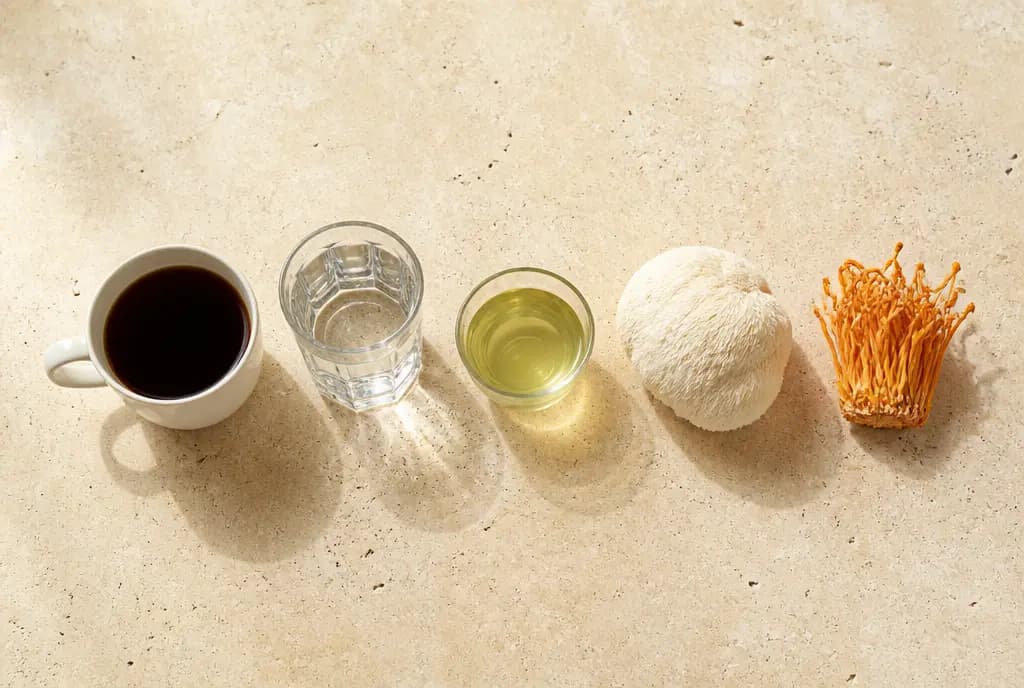
Coffee does three jobs at once. It wakes you up, gives you something pleasant to drink, and turns the start of work into a small daily ceremony.
Take it away, and people often try to replace all three jobs with one beige powder promising "clean energy." That is usually where the trouble starts. A drink can preserve the ritual without improving alertness, while a supplement can support energy without giving you anything enjoyable to hold beside your keyboard.
The best caffeine alternative therefore depends on what you actually miss: the stimulant, the taste, the routine, or simply the feeling of being functional. Once you separate those jobs, finding a replacement becomes much easier.
Why Look for a Caffeine Alternative?
Caffeine is not inherently bad. Most healthy adults can consume it in moderation without any problems, and there is no prize for abandoning coffee if it makes you feel good and does not disturb your sleep.
Some people, however, are much more sensitive. Even a relatively small amount can cause anxiety, restlessness, digestive discomfort, headaches, or palpitations. Taking it too late can also interfere with sleep, leaving you more dependent on caffeine the following morning.
Then there is the caffeine crash. The initial lift wears off, tiredness returns, and another coffee begins to look extremely attractive. If you need increasingly large amounts just to feel normal, or your afternoon coffee is quietly ruining the following night, cutting back probably makes sense.
What Is the Best Alternative to Caffeine
That depends on what you are actually trying to replace. Green tea suits someone who still wants a gentler stimulant. Decaf works better if the taste and ritual matter most. Food, water, movement, daylight, and sleep address genuine tiredness rather than temporarily hiding it.
Caffeine-free supplements belong in a different category. They may support particular aspects of energy or focus, but they do not recreate coffee's immediate effect. The table below is a more useful starting point than searching for one universal substitute.
| What you want | Best place to start | Caffeine? |
|---|---|---|
| A gentler stimulant | Green tea | Yes |
| The taste and ritual of coffee | Decaf coffee | A small amount |
| More physical energy | Food, water, movement, and sleep | No |
| Support for stamina | Cordyceps | No |
| Support for focus | Lion’s Mane | No |
How to Get Energy Without Caffeine
None of the most reliable options are particularly glamorous. They are still worth trying before buying another energy drink, especially when the problem is not a lack of stimulation but a lack of fuel, fluid, movement, light, or sleep.
- Drink some water. Dehydration can contribute to tiredness, headaches, and difficulty concentrating. Extra water will not energize someone who is already properly hydrated, but it can help if you have barely drunk anything all morning.
- Eat something substantial. Coffee is a drink, not breakfast. A meal containing protein, fiber, fats, and slower-digesting carbohydrates provides actual fuel instead of temporarily hiding hunger.
- Move for a few minutes. A brisk walk can make a surprising difference when your attention starts drifting. A meta-review covering 383 studies found that acute exercise produced small-to-moderate improvements across attention, memory, and executive function.
- Step outside. Daylight helps regulate the sleep-wake cycle and can increase alertness. A systematic review of daytime light exposure found the clearest effects on alertness and working memory.
- Get enough sleep. Caffeine can conceal sleepiness. It cannot replace the attention, mood, or recovery lost through repeatedly sleeping five hours.
Often, the best caffeine alternative is not another substance. It is dealing with whatever made you tired in the first place. A new drink or supplement may still have a role, but it should sit on top of those foundations rather than attempt to replace them.
Low-Caffeine and Caffeine-Free Alternatives to Coffee
Sometimes you are not looking for energy at all. You just want something warm beside your keyboard, a reason to pause, or the familiar signal that the working day has begun.
That makes the ritual much easier to replace than the stimulant. The following drinks will not all make you more alert, but they can preserve the part of coffee that has nothing to do with adenosine receptors.
Decaf Coffee
Decaf is the closest replacement if you enjoy the taste and routine of coffee. It is not completely caffeine-free, but the amount is usually much lower. According to the FDA, an eight-ounce cup typically contains around 2 to 15 mg.
That may still matter if you are extremely sensitive to caffeine or drink several cups. For most people trying to reduce their intake without surrendering the coffee itself, it is a considerable step down.
Chicory and Roasted Grain Drinks
Chicory root, barley, rye, and similar roasted ingredients can produce the dark, bitter flavor associated with coffee. They will not make you more alert, but they can preserve the warmth and ceremony without keeping you awake at night.
The taste varies considerably between products, so it may take a few attempts to find one that does not feel like an obvious compromise. Check the ingredients as well, particularly if you have allergies or dietary restrictions.
Herbal Tea
Rooibos, peppermint, ginger, and chamomile are naturally caffeine-free. None will reproduce the effect of a double espresso, and that may be exactly the point. They provide a drink and a pause without turning every break into another stimulant dose.
Choose the tea for its flavor rather than expecting it to manufacture energy. If you want something closer to coffee's bitterness, roasted chicory or grain drinks will usually make more sense.
Which Coffee Alternatives Still Contain Caffeine?
"Natural" does not mean caffeine-free. Nor does "tea." A replacement can come in greener packaging and still leave you staring at the ceiling at midnight.
Green tea generally contains less caffeine than coffee, while black tea usually contains more than green tea. Matcha can provide a fairly substantial dose because you consume the powdered leaf rather than simply steeping it in water.
Yerba maté, guarana, cacao, and many "clean energy" drinks also contain caffeine or other stimulatory compounds. Some mushroom coffees contain ordinary coffee alongside the mushroom extract. Check the label rather than relying on the name. Caffeine sourced from a leaf instead of a coffee bean is still caffeine.
Can Functional Mushrooms Support Energy and Focus?
Functional mushrooms are often marketed as natural caffeine alternatives. The comparison is slightly misleading because they work in a completely different way.
They do not block adenosine receptors or produce coffee's immediate hit. Their possible benefits are subtler and usually associated with consistent use. Whether functional mushrooms give you energy therefore depends partly on what you mean by energy.
If you want to feel dramatically more awake within ten minutes, they are unlikely to satisfy you. If you want non-stimulant support for physical stamina or mental clarity, particular mushrooms may fit more naturally into the wider routine.
Cordyceps for Energy and Stamina
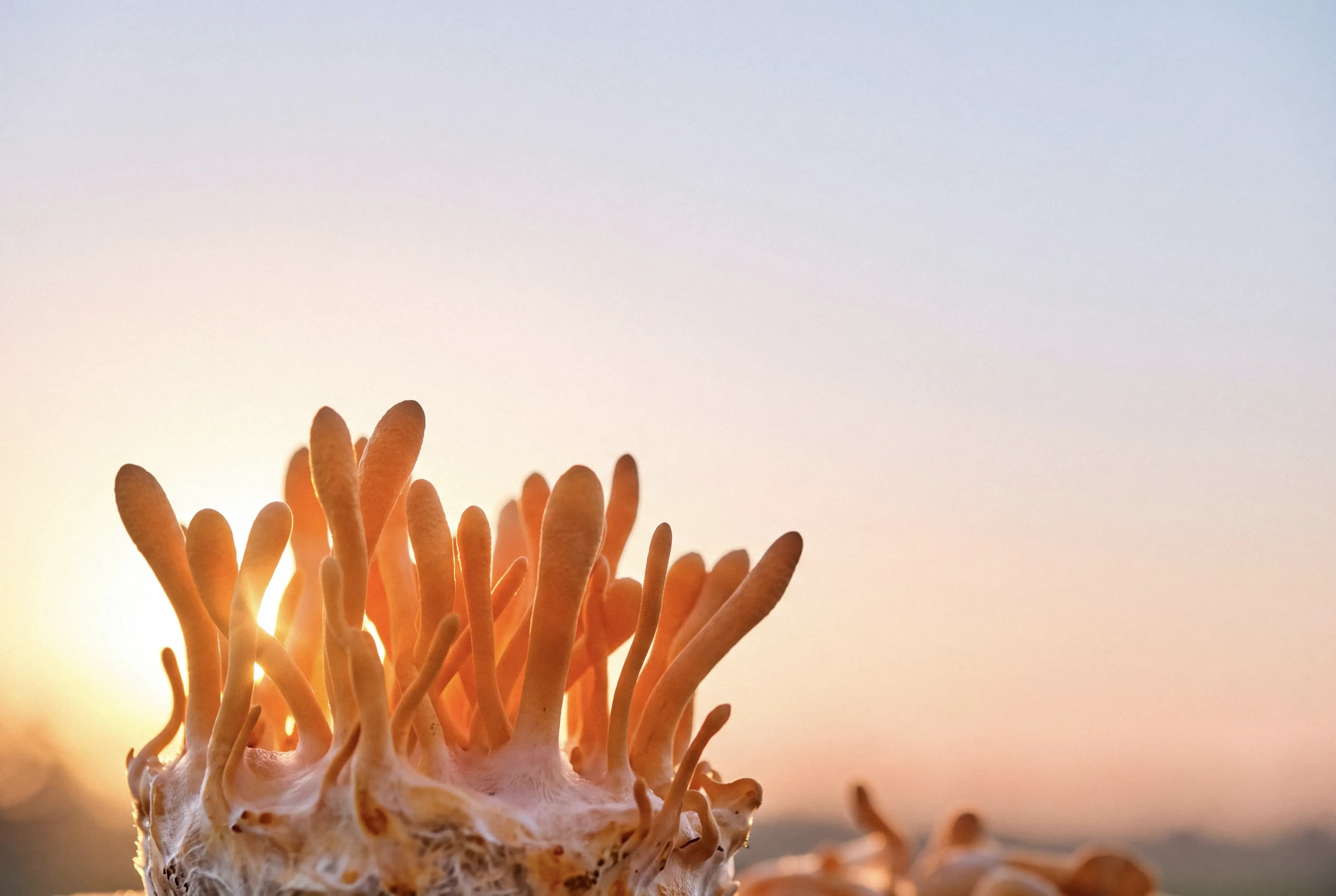
Cordyceps is the functional mushroom most closely associated with physical energy, endurance, and recovery. It is often used by people who want support for training or daily stamina without adding another stimulant.
Small human trials have produced mixed results. A recent systematic review and meta-analysis found possible improvements in endurance performance and aerobic capacity, although the available trials were small and used different preparations.
Cordyceps should not feel like coffee. It may support how the body produces and uses energy, but it will not jolt an exhausted brain into life within ten minutes. Food, hydration, sleep, and an appropriate training load still matter far more.
Lion's Mane for Focus
Lion's Mane is more closely associated with concentration, memory, and mental clarity. This makes it the more logical option when the part of coffee you miss is the sense of mental sharpness rather than physical drive.
One small trial in healthy adults found faster performance on one cognitive task after a single dose, alongside a possible reduction in stress after 28 days. Other measures did not improve, and more recent research has also produced mixed results.
That makes Lion's Mane interesting rather than conclusive. It may support focus over time, but it is not a stimulant and should not be judged by whether you feel an immediate buzz. Mushroom extracts can take time to work, so consistency matters more than taking a huge dose before an important meeting.
Be Careful With "Caffeine-Free" Energy Supplements
Some products hide their stimulants behind more appealing names. A supplement can be marketed as natural, plant-based, or coffee-free while still delivering a substantial caffeine dose.
Guarana, green tea extract, yerba maté, and kola nut are all sources of caffeine. Proprietary blends can make the total harder to understand, so check both the ingredient list and the stated caffeine content rather than assuming the front of the packet tells the whole story.
B vitamins are another favorite. They play an essential role in energy metabolism, but taking more does not automatically give you more energy. Iron may help fatigue caused by iron deficiency, but it should not be taken casually without medical advice.
No supplement can compensate for an inadequate diet, chronic sleep deprivation, or an underlying medical condition. Persistent fatigue deserves investigation, particularly when it continues despite eating and sleeping properly.
How to Reduce Caffeine Without the Headache
Stopping overnight can cause headaches, fatigue, irritability, and difficulty concentrating. Withdrawal usually begins within 12 to 24 hours and may last several days, according to a review of the evidence.
A gradual reduction is usually easier because it gives your body time to adjust while preserving part of the routine.
- Mix regular and decaf coffee, then gradually increase the proportion of decaf.
- Replace the final coffee of the day first, particularly if sleep is part of the problem.
- Use smaller cups or fewer espresso shots rather than relying on willpower halfway through a large drink.
- Check energy drinks, pre-workouts, and supplements for caffeine you may have forgotten to count.
- Reduce the total dose every few days instead of immediately dropping to zero.
You do not receive extra points for suffering. A slower reduction that you can sustain is more useful than an heroic first day followed by three coffees on the second.
Replace the Job, Not Just the Drink
The best caffeine alternative is the one that solves the right problem. Green tea provides a smaller stimulant dose, while decaf, chicory, and herbal tea replace the taste or ritual. Food, water, daylight, movement, and sleep address the foundations of energy.
For non-stimulant support, Cordyceps is the more logical choice for physical energy and stamina, while Lion's Mane is better suited to focus and mental clarity. Neither is liquid coffee, and neither should be expected to erase genuine exhaustion.
Explore Lucetic's Cordyceps Extract or Lion's Mane Extract for caffeine-free support made from US-grown fruiting bodies, using dual extraction and independent testing. If you are trying to replace the third or fourth cup rather than recreate the first, that may be precisely where they fit.
References
-
Chang YK, Ren FF, Li RH, Ai JY, Kao SC, Etnier JL. Effects of acute exercise on cognitive function: a meta-review of 30 systematic reviews with meta-analyses. Psychological Bulletin. 2025;151(2):240–259.
-
Bjerrum LB, Nordhus IH, Sørensen L, et al. Acute effects of light during daytime on central aspects of attention and affect: a systematic review. Biological Psychology. 2024;192:108845.
-
US Food and Drug Administration. Spilling the Beans: How Much Caffeine Is Too Much? 2024.
-
Shu MY, Zhang XC, Zuo L, Jiang FL, Liang J, Li F. Effects of fungal supplementation on endurance, immune function, and hematological profiles in adult athletes: a systematic review and meta-analysis. Frontiers in Nutrition. 2025;12:1670416.
-
Docherty S, Doughty FL, Smith EF. The acute and chronic effects of Lion’s Mane mushroom supplementation on cognitive function, stress, and mood in young adults. Nutrients. 2023;15(22):4842.
-
Juliano LM, Griffiths RR. A critical review of caffeine withdrawal: empirical validation of symptoms and signs, incidence, severity, and associated features. Psychopharmacology. 2004;176(1):1–29.