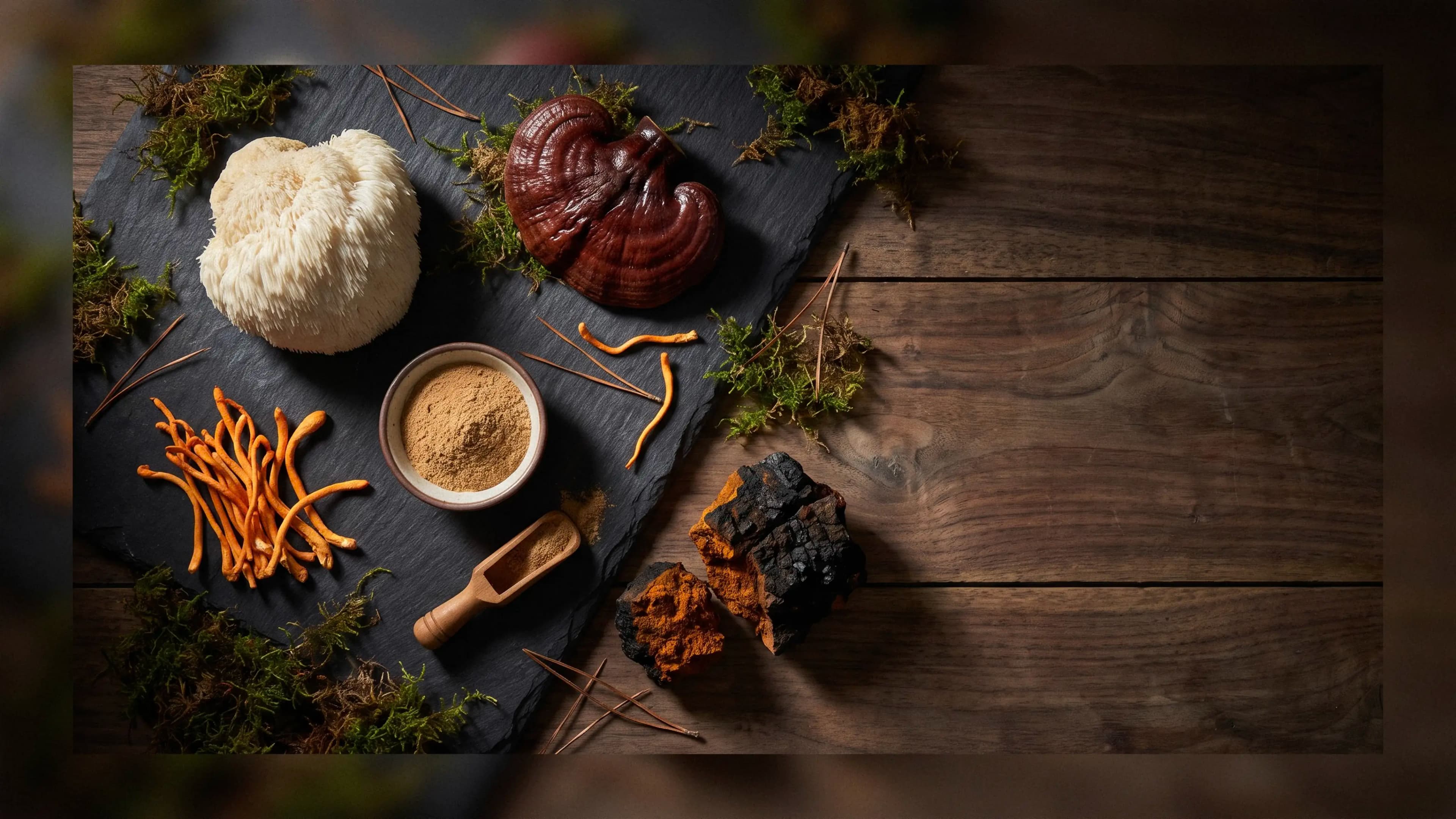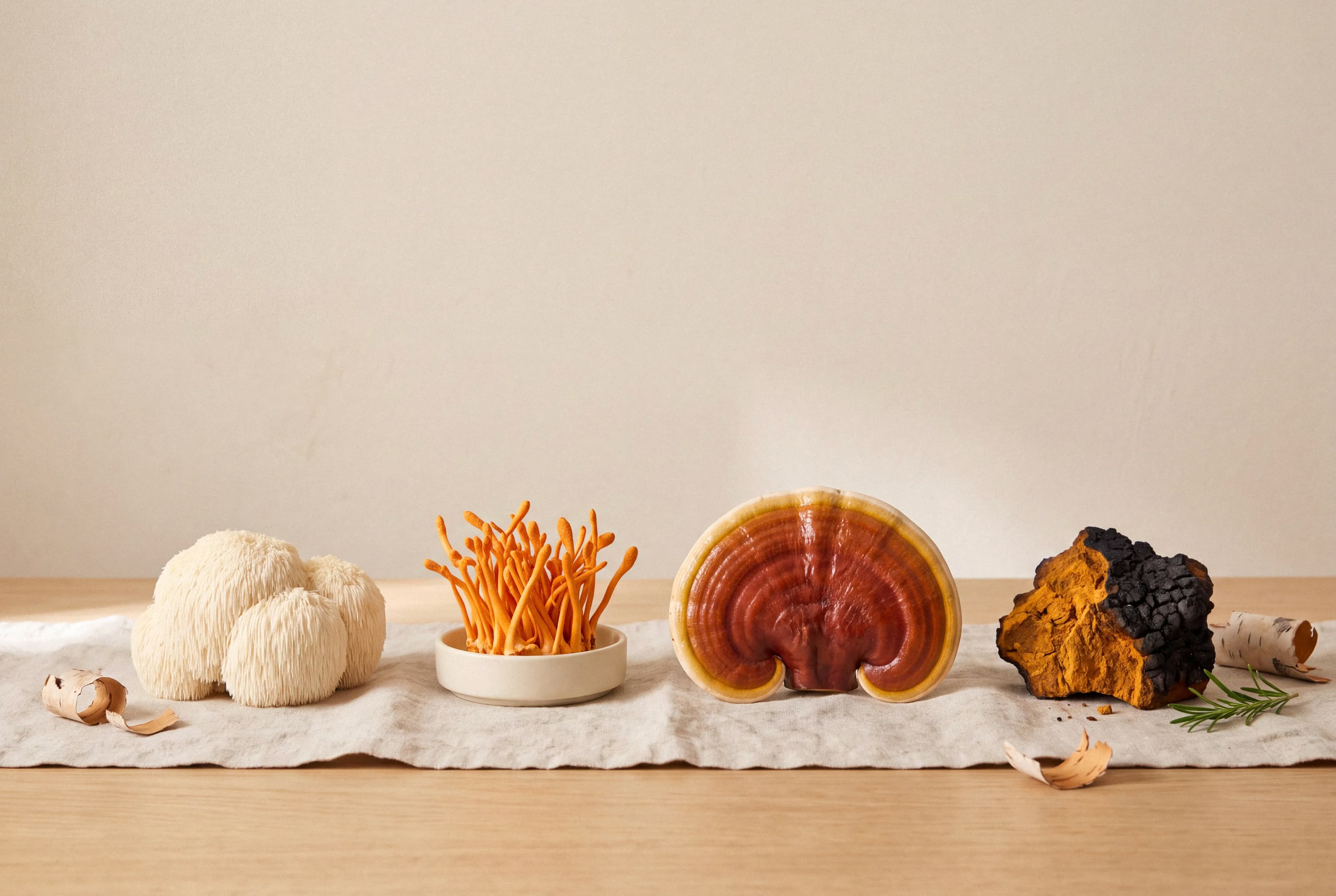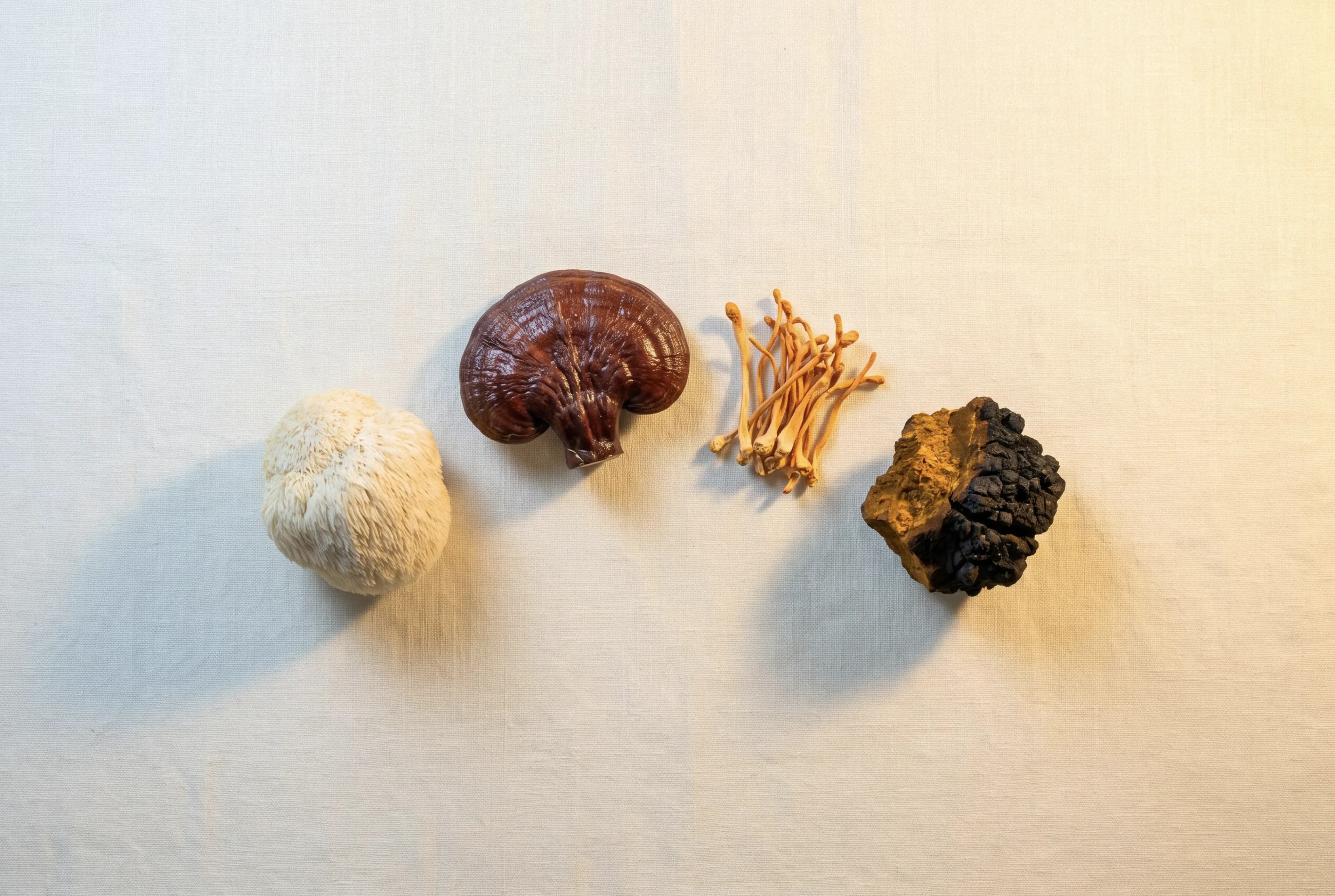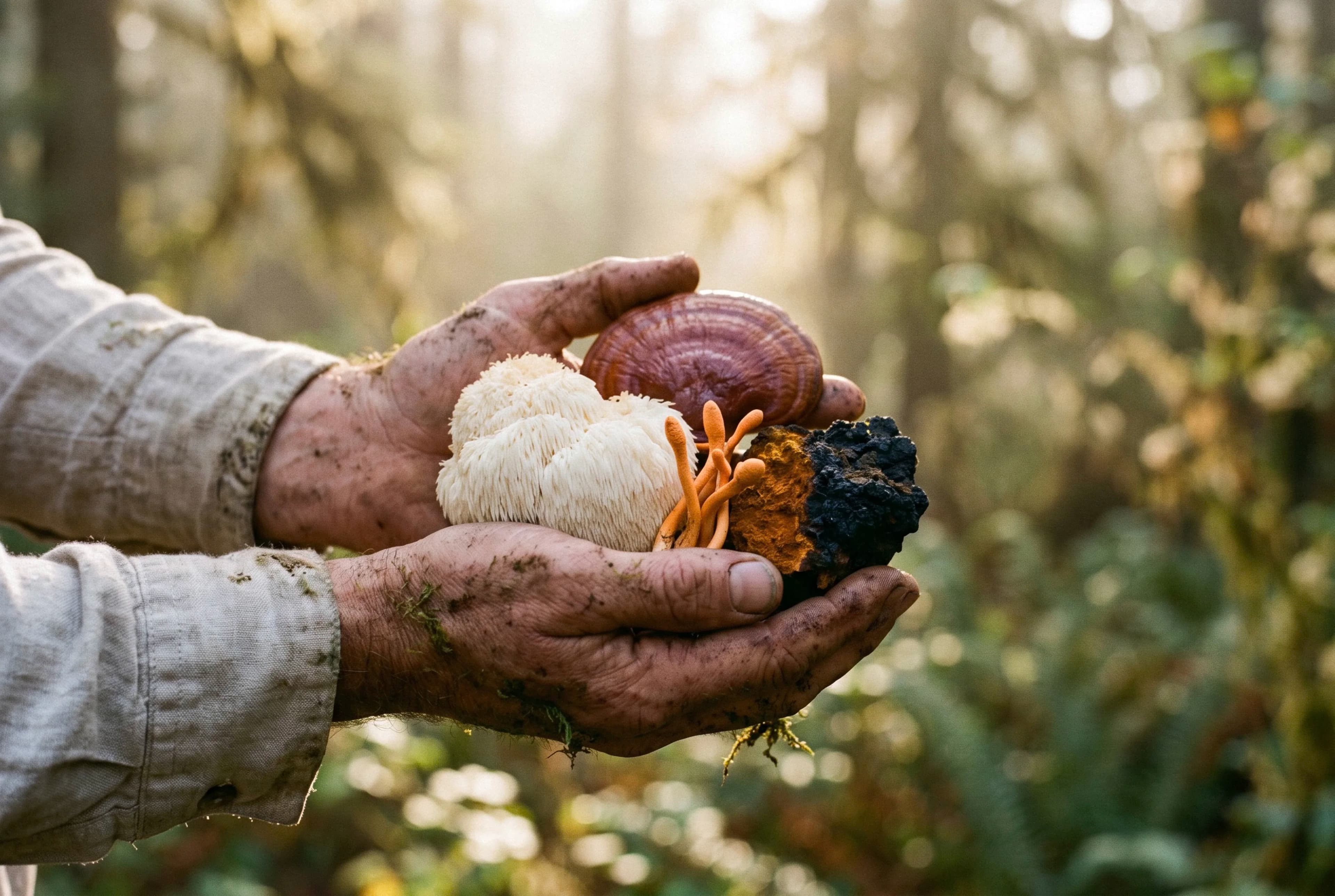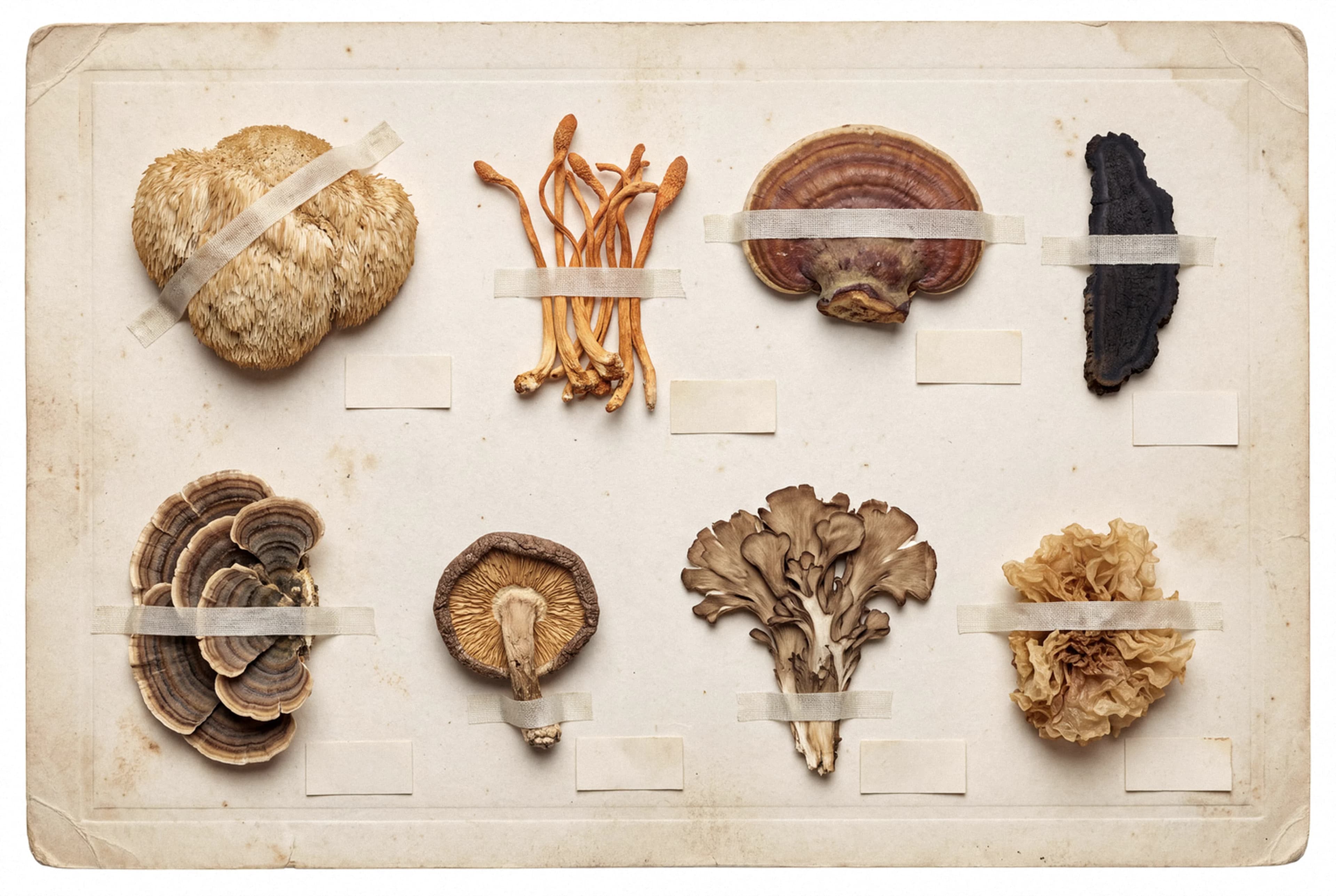
Seen together, medicinal mushrooms are a strange bunch. Lion's Mane looks like a mound of grated parmesan. Cordyceps is famous for hijacking insect brains and growing from the dead. Reishi resembles varnished wood, while Chaga could easily be mistaken for a burnt lump on the side of a tree.
Some have thousands of years of traditional use behind them. Others have only recently escaped the laboratory and entered the supplement aisle.
What Are Medicinal Mushrooms?
The term sounds more official than it is. A medicinal mushroom isn't a medicine, nor does the name mean it can treat a disease. It's simply a mushroom consumed for benefits beyond basic nutrition.
You'll also hear them called functional mushrooms, which is probably more accurate. Shiitake and Lion's Mane are perfectly good foods. Reishi and Chaga are too tough or bitter to make much of a meal and are usually made into extracts.
Are Medicinal Mushrooms Psychedelic?
No. The mushrooms covered in this guide do not contain psilocybin, the compound responsible for hallucinations and altered perception.
The confusion is understandable. Terms such as "brain mushroom" and "neurotrophic" make Lion's Mane sound more exciting than it really is. As we explain in our guide to Lion's Mane and psychedelic mushrooms, cognitive support is not the same as getting high. Functional mushrooms are also legal throughout the United States.
What Are the Main Types of Medicinal Mushrooms?
More than 100 mushroom species have been used medicinally somewhere in the world. Most beginners, however, will repeatedly encounter the same eight.
Lion’s Mane Looks Like It Belongs Under the Sea
Scientific name: Hericium erinaceus
Origin: Temperate forests across North America, Europe, and Asia
Appearance: A white, shaggy cluster covered in long, dangling spines
Commonly taken for: Focus, memory, and mental clarity
The shaggy white fruiting body is now better known as the "brain mushroom." Compounds called hericenones have attracted interest, although human trials remain small and mixed.
Cordyceps Is the Famous Zombie Fungus
Scientific names: Cordyceps militaris and Ophiocordyceps sinensis
Origin: Wild species occur across Asia, Europe, and North America
Appearance: Thin, club-shaped fruiting bodies, usually orange or red
Commonly taken for: Energy, stamina, and exercise
Wild Cordyceps species grow by parasitizing insects. Thankfully, your supplement hasn't been scraped from a dead caterpillar. Most modern extracts use cultivated C. militaris. Human trials are mixed, but Cordyceps remains the mushroom most closely associated with physical energy.
Reishi Was Called the Mushroom of Immortality
Scientific name: Ganoderma lucidum
Origin: Temperate and tropical regions across Asia, Europe, and North America
Appearance: A woody, reddish-brown cap with a glossy, varnished surface
Traditionally used for: Longevity, vitality, and balance
Commonly taken for: Relaxation, sleep, and recovery
Reishi has a glossy, reddish surface that looks almost lacquered. Its reputation is far grander than the evidence, but a few human trials have reported improvements in fatigue and well-being. It isn't a sedative.
Chaga Barely Looks Like a Mushroom
Scientific name: Ganoderma lucidum
Origin: Temperate and tropical regions across Asia, Europe, and North America
Appearance: A woody, reddish-brown cap with a glossy, varnished surface
Traditionally used for: Longevity, vitality, and balance
Commonly taken for: Relaxation, sleep, and recovery
Reishi has a glossy, reddish surface that looks almost lacquered. Its reputation is far grander than the evidence, but a few human trials have reported improvements in fatigue and well-being. It isn't a sedative.
Turkey Tail Does Exactly What Its Name Suggests
Scientific name: Trametes versicolor
Origin: Woodlands throughout the world
Appearance: Thin, fan-shaped shelves covered in multicolored rings
Commonly taken for: Immune support
Turkey Tail grows in colorful bands resembling tail feathers. A purified extract called PSK has been used alongside cancer treatment in Japan, but an ordinary Turkey Tail supplement is not the same product and should never be treated as cancer therapy. The National Cancer Institute explains the distinction.
Shiitake Sits Between Food and Supplement
Scientific name: Lentinula edodes
Origin: East Asia
Appearance: A brown, umbrella-shaped cap with pale gills and a short stem
Commonly taken for: Nutrition and immune support
Shiitake is the familiar one. You can fry it, add it to soup, or buy it as an extract. A small human study found changes in some immune markers after participants ate it daily, although that doesn't establish the benefits of every Shiitake supplement.
Maitake Is the Dancing Mushroom
Scientific name: Grifola frondosa
Origin: Temperate forests across Asia, Europe, and eastern North America
Appearance: Large clusters of overlapping gray-brown fronds
Commonly taken for: Immune and metabolic support
Maitake grows in feathered clusters at the base of trees. Its Japanese name means "dancing mushroom," supposedly because people danced with joy when they found one. It's rich in beta-glucans, but human research into Maitake supplements remains limited.
Tremella Is the Beauty Mushroom
Scientific name: Tremella fuciformis
Origin: Tropical and subtropical regions, with a long history of cultivation in China
Appearance: White or translucent clusters with soft, jelly-like folds
Commonly taken for: Skin hydration and antioxidant support
Tremella is white, translucent, and jelly-like. Its texture has helped make it popular in beauty supplements and skincare. The idea is plausible, but research into its effects on human skin is still at an early stage.
How Can You Take Medicinal Mushrooms?
You don't have to start frying Turkey Tail or gnawing on a lump of Chaga. Most medicinal mushrooms are sold in one of four forms:
- Powders are either ground mushrooms or dried extracts. That distinction matters because a basic powder hasn't necessarily undergone extraction.
- Capsules contain powder in a fixed serving. They're convenient and hide the flavor, but the label should still state what kind of extract is inside.
- Teas, coffees, and gummies are easy to add to a routine. Multi-ingredient products sometimes contain only small quantities of each mushroom, so check the individual amounts.
- Tinctures are concentrated liquid extracts. They can be taken directly or added to food and drinks without measuring scoops or swallowing capsules.
Why Are Tinctures Usually the Best Option?
For most beginners, tinctures are the simplest place to start. Not because every liquid beats every capsule, but because a good tincture has already done the difficult bit: extraction.
Mushroom compounds sit behind tough cell walls made from chitin. Hot water draws out compounds such as beta-glucans, while alcohol reaches less water-soluble compounds, including many triterpenes. Dual extraction combines both steps, producing a broader extract in a small serving.
Tinctures take seconds to use and make the serving easy to adjust. A good extracted powder can still outperform a bad tincture, however.
What Should You Look for in a Mushroom Tincture?
Check the species, part used, extraction method, concentration, and ingredients. Ideally, the label should identify a fruiting-body extract rather than hiding grain-grown mycelium inside a vague "mushroom complex."
Independent testing is just as important. Look for a certificate of analysis covering identity, heavy metals, microbes, and other contaminants. If a company won't show you what is in the bottle or how it was made, choose another bottle.
Are Medicinal Mushroom Tinctures Safe?
Generally, yes. Possible side effects include digestive discomfort, headache, dizziness, rash, or an allergic reaction. The FDA recommends speaking to a healthcare professional before combining supplements with medication.
You should also get medical advice if you are pregnant or breastfeeding, have kidney or liver disease, or are preparing for surgery. Chaga deserves particular caution because prolonged, high-dose consumption has been linked to kidney injury in case reports.
Which Medicinal Mushroom Tincture Should You Choose?
Start with the reason you're taking it:
- Choose Lion's Mane if you want cognitive support. It is the natural starting point for focus, memory, and mentally demanding work.
- Choose Cordyceps if you want physical energy. It suits exercise, active days, and people looking for stamina without another stimulant.
- Choose Reishi if you want to slow down. It is usually taken later in the day for relaxation, sleep, and recovery.
- Choose Chaga if you want broader daily support. It is primarily chosen for its antioxidant content rather than a noticeable short-term effect.
Lucetic doesn't pretend these are the only medicinal mushrooms. We focus on four of the most widely used and make them properly: US-grown fruiting bodies, dual extraction, a 10:1 concentration, alcohol-free formulas, and independent testing.
Explore Lucetic's medicinal mushroom tinctures, or take our two-minute mushroom quiz if you still don't know where to begin.
References
-
National Cancer Institute. Medicinal Mushrooms (PDQ®)–Health Professional Version.
-
National Cancer Institute. Medicinal Mushrooms (PDQ®)–Patient Version.
-
Dai X, Stanilka JM, Rowe CA, et al. Consuming Lentinula edodes (Shiitake) mushrooms daily improves human immunity: a randomized dietary intervention in healthy young adults. Journal of the American College of Nutrition. 2015;34(6):478–487.
-
Ulbricht C, Weissner W, Basch E, et al. Maitake mushroom (Grifola frondosa): systematic review by the Natural Standard Research Collaboration. Journal of the Society for Integrative Oncology. 2009;7(2):66–72.
-
Mineroff J, Jagdeo J. The potential cutaneous benefits of Tremella fuciformis. Archives of Dermatological Research. 2023;315(7):1883–1886.
-
US Food and Drug Administration. Mixing Medications and Dietary Supplements Can Endanger Your Health.
-
Kwon O, Kim Y, Paek JH, et al. Chaga mushroom-induced oxalate nephropathy that clinically manifested as nephrotic syndrome: a case report. Medicine. 2022;101(10):e28997.