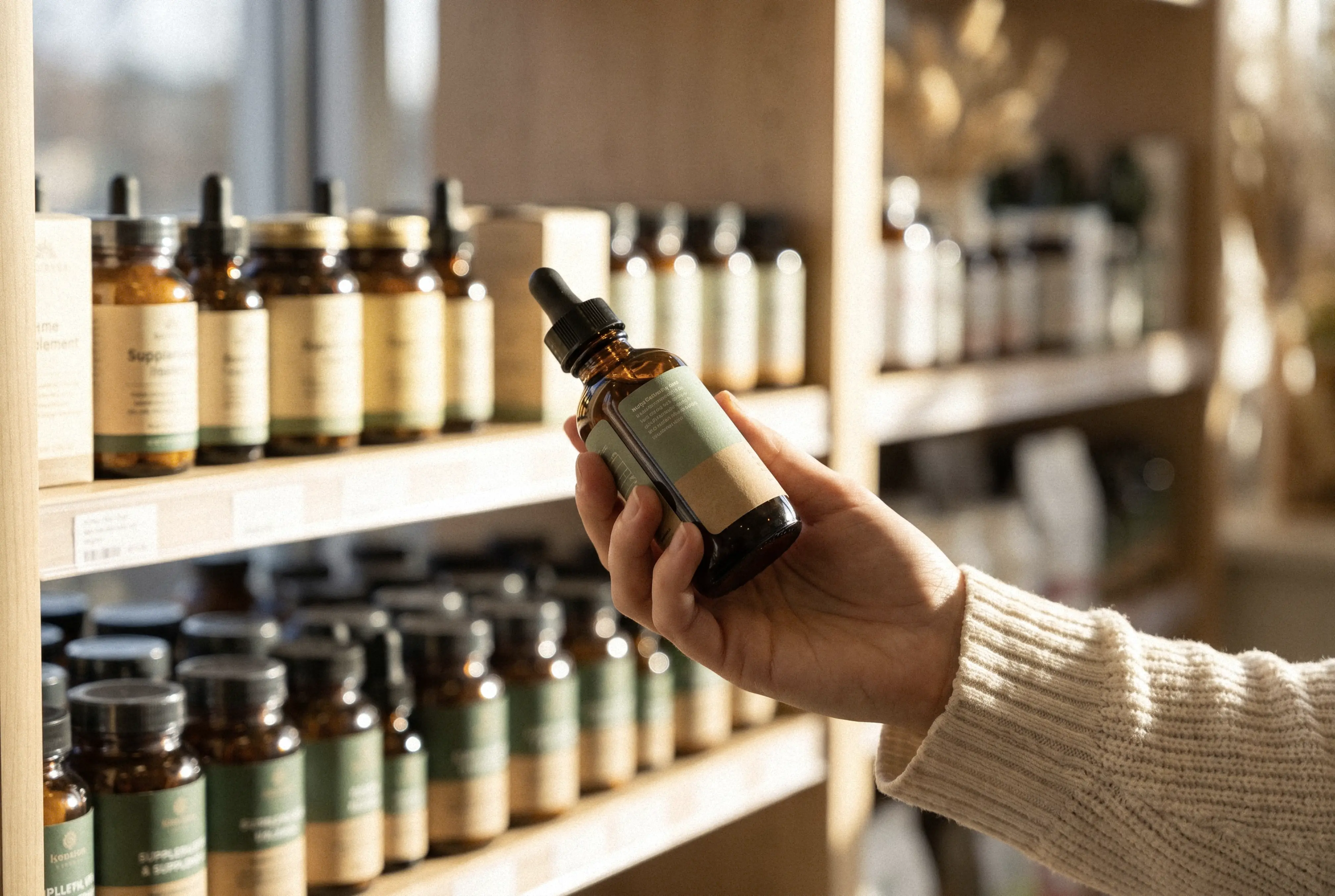
Spend a few minutes shopping for mushroom tinctures, and you’ll encounter a familiar wall of green labels. Products are described as natural, clean, pure, premium, and, of course, organic. It all sounds reassuring, even when the bottle gives you very little useful information.
The problem is that most of those words have no agreed meaning. “Organic” does, at least in the United States.
The USDA regulates which products can be described as organic, how much of the finished formula must be organic, and when the familiar USDA seal can appear. However, certification only covers certain aspects of how a product was grown and handled. It does not prove that the tincture is potent, effective, or even particularly well made.
So, what should you actually look for before buying?
What Does Organic Mean on a Mushroom Tincture?
According to the USDA, organic is a labeling term used for agricultural products produced according to its National Organic Program standards. These rules cover growing conditions, permitted substances, record keeping, processing, and handling.
Among other restrictions, certified organic products cannot be produced using genetic engineering, sewage sludge, or ionizing radiation. Synthetic pesticides and fertilizers are heavily restricted, although certain approved substances can still be used.
That is the first point worth understanding: organic does not simply mean “natural” or “chemical-free.” It refers to compliance with a particular production standard.
A mushroom tincture also contains more than mushrooms. Depending on the formula, it might include water, alcohol, glycerin, honey, apple cider vinegar, or other carrier ingredients. The organic status of the finished tincture depends on the complete formula, although water and salt are excluded when the organic percentage is calculated.
What Are the USDA Organic Labeling Categories?
The USDA recognizes four main categories. The differences may sound technical, but they determine exactly what a brand can place on the label:
-
“100 percent organic” means all qualifying ingredients must be certified organic. Water and salt are not included in the calculation, and the product can display the USDA organic seal.
-
“Organic” means at least 95 percent of the qualifying ingredients must be certified organic. The remaining ingredients must meet strict USDA conditions, and the organic seal can still be used.
-
“Made with organic…” means at least 70 percent of the qualifying ingredients are organic. A label might say “made with organic mushrooms,” but it cannot display the USDA organic seal.
-
Products containing less than 70 percent organic ingredients cannot present the finished product as organic. Specific ingredients can still be identified as organic in the ingredient list.
The full requirements are available in the USDA’s organic product labeling guidance and the relevant product composition regulations.
This is why “made with organic mushrooms” and “USDA-certified organic mushroom tincture” are not interchangeable. One refers to particular ingredients. The other describes the finished product.
What Does Organic Certification Actually Guarantee?
Organic certification gives you several worthwhile assurances.
A USDA-accredited certifying agent reviews the operation, production methods, handling processes, records, and proposed labels. Certified businesses must be able to trace organic ingredients through the supply chain and demonstrate that they have followed the relevant standards.
Certification also restricts the use of prohibited substances and requires measures intended to prevent organic and non-organic ingredients from becoming mixed.
In short, the seal is not just something a brand designs and adds to the bottle. It sits behind a regulated system of inspections, records, and certification.
That is valuable, particularly when mushroom ingredients may have passed through several growers, processors, and manufacturers before reaching the finished tincture.
What Does Organic Certification Not Guarantee?
This is where people often give the organic label too much credit.
Organic certification does not tell you:
- Which part of the mushroom was used
- Whether the extract contains grain or starch
- How the mushroom was extracted
- How concentrated the finished tincture is
- How much extract you receive per serving
- Whether the product contains meaningful levels of beta-glucans
- Whether its health claims are supported by human research
- Whether every finished batch has been independently tested
It does not necessarily mean "pesticide-free," either. Organic standards control how products are produced, but environmental contamination and pesticide drift can still occur. USDA certifiers conduct periodic residue testing and investigate prohibited substances, but that is not the same as testing every finished bottle for every possible contaminant.
Nor does certification establish that one mushroom tincture will work better than another. The potential benefits of mushroom tinctures depend on the species, compounds present, dose, extraction method, and the evidence behind the proposed effect.
Organic is a production standard. It is not a clinical trial.
How to Choose a High-Quality Organic Mushroom Tincture
Whether you choose a mushroom powder or tincture, the same basic checks apply. A USDA seal is a useful starting point, but you still need to turn the bottle around.
-
Check the mushroom species and part used. The label should name the species and state whether the extract comes from fruiting bodies, mycelium, or both. "Mushroom complex" could mean almost anything.
-
Look closely at fruiting body and mycelium claims. Mycelium is not automatically worthless, but commercial mycelium products are often grown on grain, leaving starch in the finished material. A clearly identified fruiting-body extract avoids much of this uncertainty. The difference between fruiting body and mycelium matters regardless of whether either ingredient is certified organic.
-
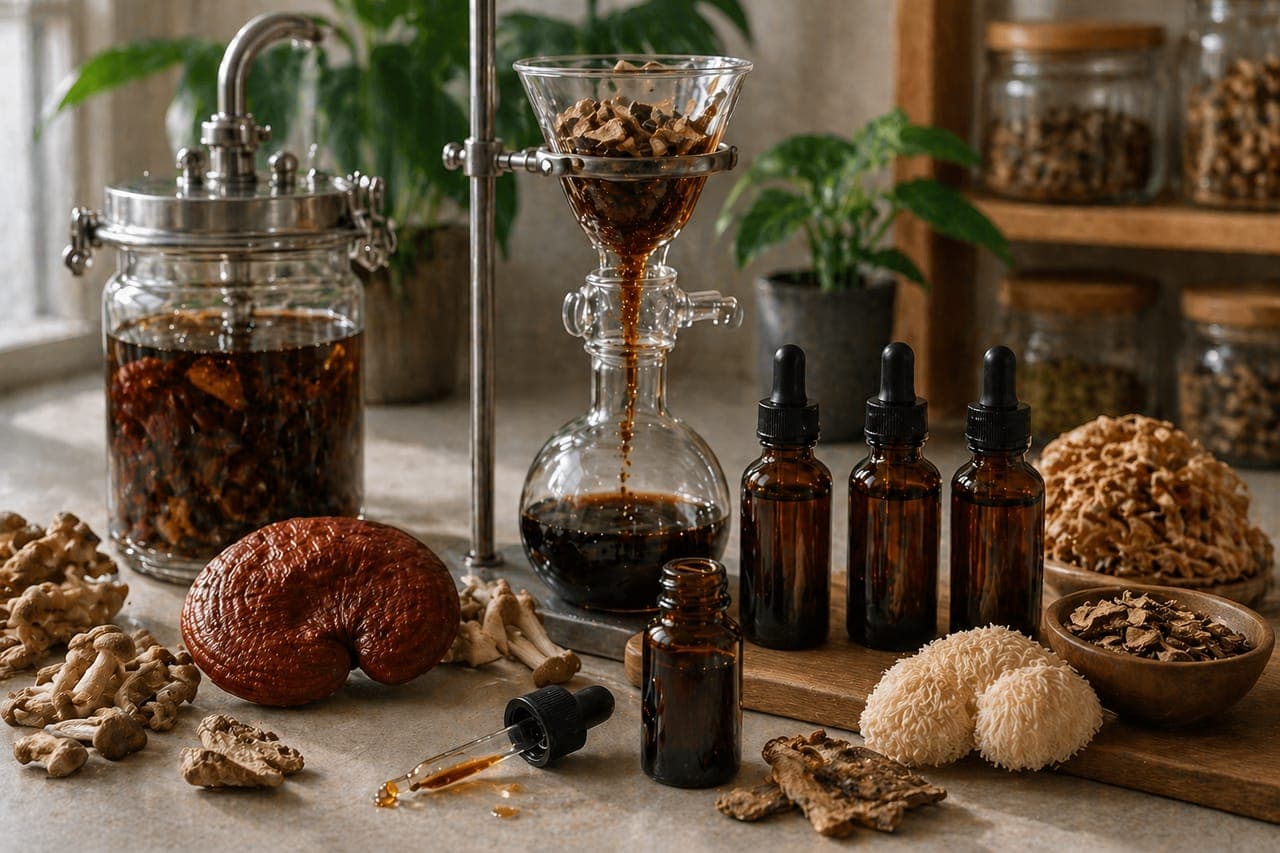
Find out how the mushroom was extracted. Hot water draws out water-soluble compounds such as beta-glucans, while alcohol can extract less water-soluble compounds, including many triterpenes. A dual-extraction mushroom tincture uses both stages, although the quality of the starting mushroom still matters.
-
Look for a meaningful concentration. An extraction ratio, such as 10:1, gives you more information than vague descriptions such as "maximum strength." Even then, the label should make clear how much extract is present and what the ratio refers to.
-
Read the complete ingredient list. Check the carrier, sweeteners, flavorings, fillers, and final alcohol content. Words such as "clean" and "pure" are less useful than a complete, understandable formula.
-
Ask what independent testing actually covers. "Lab tested" sounds impressive, but it means very little on its own. Ideally, the company should provide a batch-specific certificate of analysis covering identity and relevant contaminants, including heavy metals and microorganisms.
-
Check the manufacturing standard. The FDA's dietary supplement current Good Manufacturing Practice requirements are intended to support the identity, purity, strength, and composition of supplements while limiting contamination. This is separate from organic certification.
-
Be wary of miraculous health claims. An organic Reishi tincture has not been proven to cure insomnia, just as organic Lion's Mane has not been proven to prevent dementia. Certification does not strengthen the scientific evidence.
Is an Organic Mushroom Tincture Automatically Better?
Better in one respect, yes.
USDA certification provides stronger assurances about how the agricultural ingredients were produced and handled.
That does not automatically make it the better mushroom extract.
A certified organic tincture could still use a vague "mushroom biomass", provide no extraction information, contain a low concentration, and offer no batch-specific test results. Conversely, a tincture without USDA certification can still be made from fruiting bodies, properly extracted, transparently formulated, and independently tested.
Organic status should therefore be treated as one quality indicator among several. If two products were identical in every other respect, certification might be the deciding factor. In reality, mushroom tinctures are rarely identical.
So, Should You Buy an Organic Mushroom Tincture?
An organic mushroom tincture can be an excellent choice. Just do not allow the seal to end the investigation.
Check what species you are buying, which part of the fungus was used, how it was extracted, how concentrated it is, and whether the finished product has been tested. These factors tell you far more about the tincture itself.
Lucetic is not USDA-certified organic. Instead, we prioritize US-grown fruiting bodies, dual extraction, a 10:1 concentration, transparent ingredients, cGMP-compliant manufacturing, and independent testing.
None of those measures replace organic certification. They answer a different set of questions about what is in the bottle and how it was made.
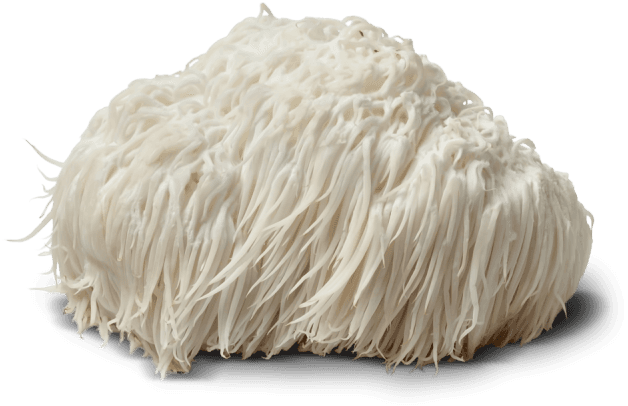
Lion’s Mane
Focus and Clarity
For heavy workloads, mental fog, and days that require your best thinking.
Cordyceps
Energy and Endurance
For long days, tough workouts, and days that test your stamina.
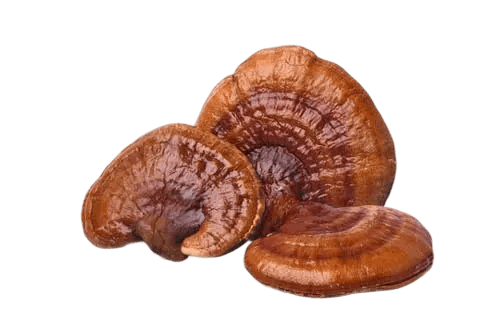
Reishi
Calm and Recovery
For winding down, steady recovery, and shutting off after a long day.
Explore Lucetic's mushroom tinctures if you want a safe, reliable supplement.
References
-
US Department of Agriculture, Agricultural Marketing Service. Labeling Organic Products.
-
Electronic Code of Federal Regulations. 7 CFR § 205.301 — Product Composition.
-
US Food and Drug Administration. Backgrounder on the Final Rule for Current Good Manufacturing Practices (CGMPs) for Dietary Supplements.
-
US Department of Agriculture, Agricultural Marketing Service. Organic Integrity Database.