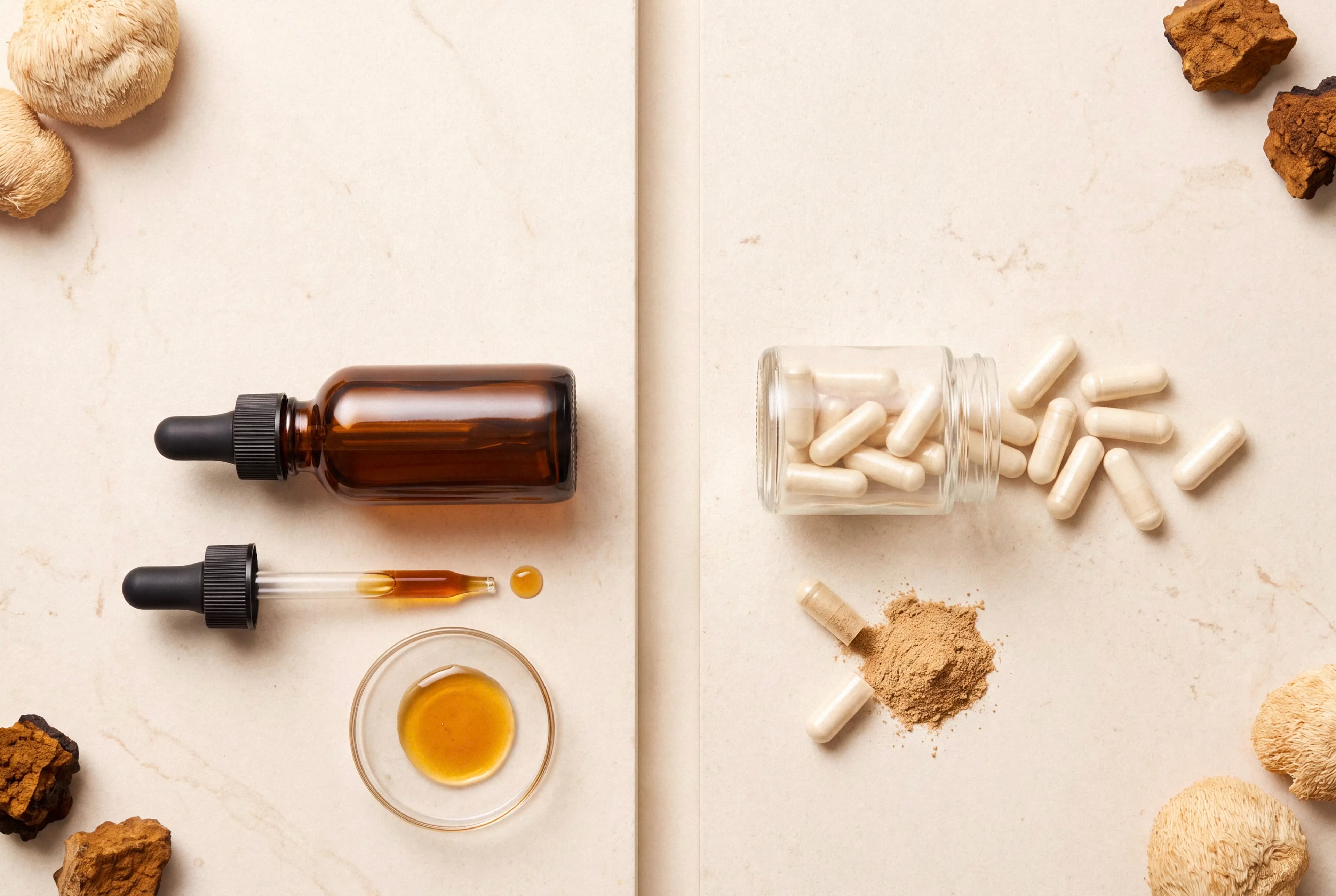
A mushroom does not care whether it ends up in a glass bottle or a capsule. By that point, the important decisions have already been made: which part was used, how it was extracted, and what else went into the final product.
That is what makes the comparison less straightforward than it first appears. A well-made capsule can run rings around a weak tincture. Once the quality is equal, however, the choice comes down to dosage, taste, convenience, and the format you are most likely to keep taking.
Mushroom Tinctures vs Capsules at a Glance
| Factor | Mushroom Tinctures | Mushroom Capsules |
|---|---|---|
| Dosage | Adjustable by the drop | Fixed amount per capsule |
| Taste | Usually noticeable | Almost none |
| Portability | Bottle can leak or break | Easy to carry |
| Ingredients | Requires a liquid base | Requires a capsule shell |
| Contents | Usually a liquid extract | May contain powder or dried extract |
| Best for | Flexible daily routines | Convenience away from home |
What Is the Difference Between Tinctures and Capsules?
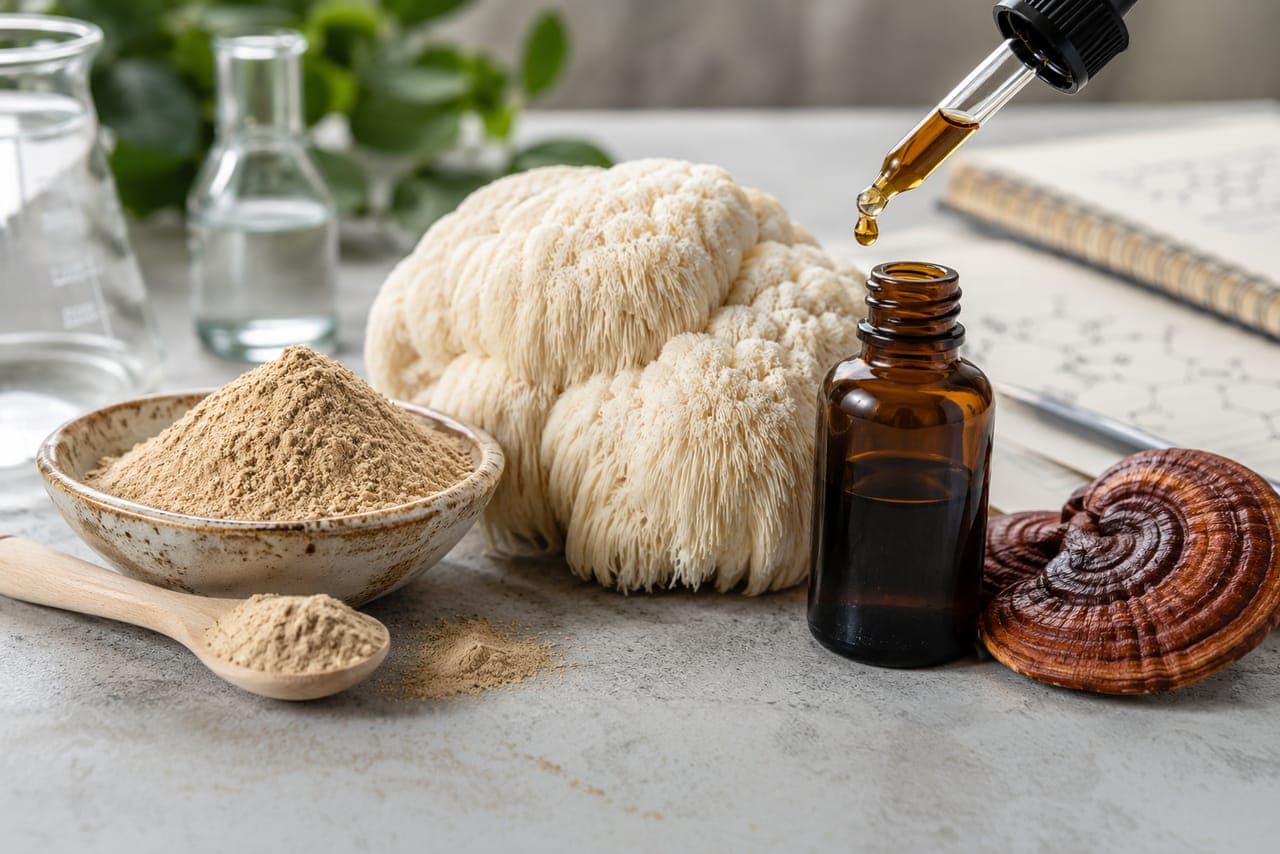
A mushroom tincture is a liquid containing compounds extracted from the mushroom. It can be taken directly or mixed into food and drinks.
A capsule is simply a shell. Inside, it might contain raw ground mushroom, a concentrated dried extract, or both. As with mushroom powder and tinctures, the front of the packaging tells you little about the concentration inside.
Are Mushroom Tinctures More Potent Than Capsules?
Not necessarily.
Pouring a weak cup of tea into a medicine bottle does not magically make it potent. A poorly made tincture may contain fewer useful compounds than a properly extracted capsule.
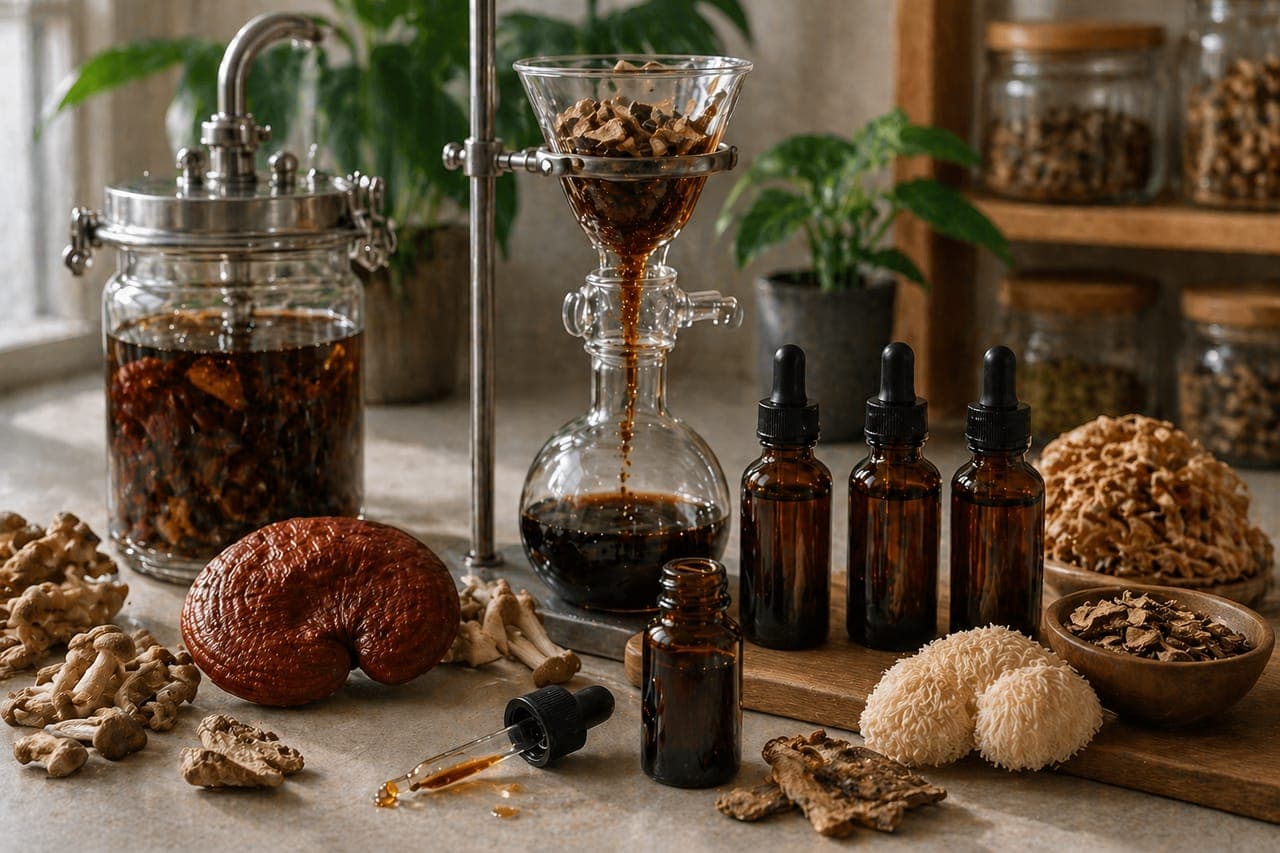
The real question is how the mushroom was processed. The mushroom extraction process separates and concentrates its compounds. The liquid can then remain a tincture or be dried and placed inside a capsule.
A dual extraction uses both water and alcohol because different mushroom compounds dissolve in different liquids. This may create a broader extract, but it can still be sold in either format. "Tincture" does not automatically mean dual-extracted, just as "capsule" does not automatically mean raw powder.
There is also no convincing evidence that mushroom tinctures produce their intended effects meaningfully faster than equivalent capsules. Functional mushrooms are generally taken consistently over time. Saving a few minutes during digestion is unlikely to transform the result.
Which Format Is Easier to Take?
This is where there is a genuine difference.
Tinctures are easy to adjust. You can start small, increase the dose gradually, or divide it across the day. They also suit people who dislike swallowing pills. The trade-off is an earthy or bitter taste and a less portable glass bottle.
Capsules are neat, tasteless, and difficult to spill. The dose is already measured, although adjusting it may mean taking an entire additional capsule.
The best format is often the one you will still be taking in three weeks. A technically perfect supplement achieves very little sitting untouched in a cupboard.\
What Else Is in the Bottle?
Neither format contains mushrooms alone.
Tinctures need a liquid base. Depending on the product, that might include water, alcohol, glycerin, vinegar, or honey. Capsules require a gelatin or plant-based shell and may also contain starch, binders, or anti-caking agents.
Read beyond the Supplement Facts panel. The FDA requires ingredients such as water, starch, stabilizers, preservatives, and flavorings to appear under "Other Ingredients." A short list is not proof of quality, but at least you know what you are taking.
Which Is Easier to Store?
Capsules travel better, although moisture and heat can damage them. Tinctures should be sealed, upright, and away from direct sunlight. Some require refrigeration, while others are shelf stable.
Follow the storage instructions on the label. The formulation matters more than the general format.
How Do You Choose a Good Mushroom Supplement?
Ignore the dropper or capsule for a moment. Look for:
- The mushroom species and part used
- A clear extraction method and concentration
- Transparent ingredients and serving information
- Independent testing for identity, microbes, and heavy metals
- A certificate of analysis for the finished product
- No vague proprietary blend hiding individual quantities
It is also worth checking whether the product uses the fruiting body, mycelium, or grain-grown mycelium. These are not interchangeable ingredients, even when the species name is identical.
Which Should You Choose?
Choose capsules if you want something tasteless, fixed, and easy to carry. Choose a tincture if you want flexible dosing, dislike swallowing pills, or prefer adding supplements to drinks and food.
Lucetic uses tinctures because they are simple to adjust and work naturally with dual extraction. Our functional mushroom extracts use US-grown fruiting bodies, a 10:1 concentration, and an alcohol-free final formula. Every batch is independently tested, with no grain, starch, or filler ingredients.
References
- US Food and Drug Administration. Questions and Answers on Dietary Supplements.